Why we get the politicians we deserve
Politics
Society
Published 1st June 2026
We talk about politicians as being uniquely corrupt failures. Incompetent, narcissistic and untruthful. However, in democracies politicians are a reflection of us. This isn’t about letting politicians off the hook; it’s about acknowledging the role of our own fantasies.
Politicians have learned that the safest route to power is telling people what they want to hear: stories that reduce anxiety, restore a sense of control and make an unstable world seem simple. Politics today has therefore become less about governing a complex reality and more about playing to our collective emotions.
When those fantasies inevitably collide with reality, we look for someone to blame and the politicians we elected become that target. They first embody of our delusions and later become the scapegoats for their collapse.
We get lied to because we want to be lied to
It seems outrageous to suggest anyone in their right mind wants to be lied to. Yet in politics, we say we want honesty while repeatedly rewarding fantastical promises.
We can see this in the demand for impossible contradictions at every election. We want lower taxes and better funded public services, drastic limits on migration without labour shortages, and cheap energy without environmental costs.
Unfortunately, politicians face electoral consequences for telling the public about necessary trade-offs. This forces them to overpromise on a host of issues or risk a rival victory. Have we as a population been deceived? Yes. But have we made it electorally safe for our politicians to be honest? No.
Humans are not naturally drawn toward painful ambiguity and we’re resistant to the truth when it feels complex or destabilising.
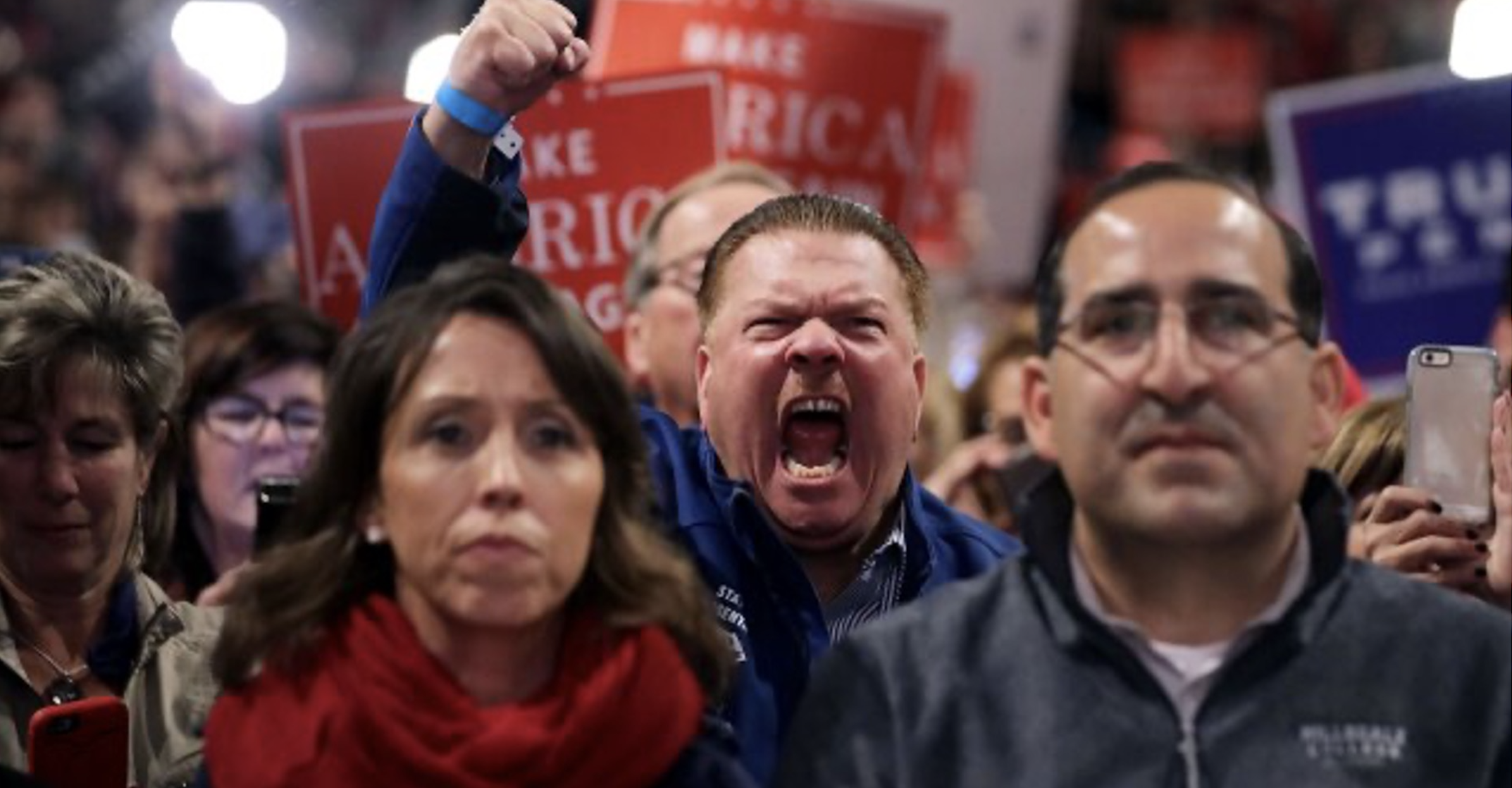
This is why simple political narratives are so effective. When Trump promises to “Make America Great Again”, or when Brexit was reduced to an emotionally satisfying promise to “Take Back Control”, many were seduced. For people facing genuine hardship, the appeal of a clear and transformative way out can be especially strong.
It’s not our fault that campaigns are persuasive, but if we want change, we’ve got to stop rewarding those who sell us a pipe dream.
We mistake confidence for competence
One of the strongest predictors of political success is not expertise, but the ability to project confidence. This is largely because we rely on cognitive shortcuts when judging leadership.
When someone speaks fluently and without visible doubt, we instinctively assume they know what they’re talking about. Meanwhile, nuance and intellectual caution are mistaken for weakness, despite it sometimes reflecting greater truth.
This bias towards perceived confidence can be seen in the heights of American presidents. Taller candidates have won the popular vote roughly two-thirds of the time, and only two US presidents have ever been below average American male height.
This is not because height has anything to do with good judgement, and it’s unlikely that Abraham Lincoln left a secret manual on how to lead on a particularly high-up shelf in the Oval Office. Rather, American voters subconsciously associate physical stature with authority, strength and competence.
The craving for power and certainty intensifies during crises. In times of upheaval populations become incredibly receptive to authoritarian signalling, comforted by displays of strength and control. Who offers this illusion better than leaders who repeatedly claim to be “Big Strong Guys”?
We turn politicians into scapegoats
Brexit and Trump were not imposed on populations. They were democratic outcomes shaped by millions of individual frustrations and beliefs. Yet when the results disappoint, societies distance themselves from their own participation.
After disappointment, public anger tends to look for a neat target. It’s easier to direct frustration at individuals than at abstractions like globalisation or technological disruption.
Psychologists call this the self-serving bias: our tendency to take credit for successes while blaming failures on external forces. In politics, that often means owning the outcome when things go well, but shifting responsibility onto politicians when they don’t.
What follows political disappointment is rarely collective self-reflection. More often, people double down. Admitting that deeply held beliefs are wrong is uncomfortable, especially when identity and emotion are involved. While many Brexit voters would not make the same decision to leave the EU now, they still make up most of the ever further nationalist party Reform. Ultimately led astray again by someone who lied to them originally. The narrative is not that our instincts were flawed, but that certain politicians failed to deliver it properly.
Conclusion
We cannot detach politicians from the societies that produce them. People elect politicians who understand how to tap into their deepest anxieties and offer things that make them feel better.
In this way politicians hold a mirror to our deepest and most insecure tendencies. And the reason we find it so enraging and exhausting, is that we cannot stand our own reflection. What it shows us is a scared and chaotic society with a hunger for simple and unrealistic solutions.
The hard reckoning this demands is not cynicism about democracy, but honesty about ourselves as its participants. We deserve better politicians in the same way we deserve better health, in that it requires something of us. It requires tolerating leaders who speak in trade-offs rather than slogans. Rewarding those who say they don’t know over the person who promises to fix all your problems overnight.
Until then, every campaign promise is a terrible transaction that we willingly enter, and an endless cycle of hope and dismay.