What’s Offside: Racism, Politics and the Lines English Football Keeps Moving
Politics
Society
Published 19th May 2026
Racism has always been present in English football. As a match going Chelsea supporter, and having researched racism in football for my university dissertation, that reality is, unfortunately, impossible to ignore.
Football has long reflected the tensions, divisions, and prejudices that exist within wider society. But it isn’t just a mirror. It is an arena that has significant social and cultural influence. Millions of people build identity, belonging, and community through clubs and national teams. The game shapes conversations far beyond the pitch.
The question therefore is not simply about whether racism exists in football, but how modern politics, social media, and the public are responding to it. Increasingly, racist and exclusionary attitudes are woven into the everyday culture of football, reinforced through repetition, legitimised through uneven reactions, and shaped by a wider political climate in which the boundaries of acceptable discourse continue to shift. The issue is now two fold. There is the persistence of discrimination itself, and there is the growing normalisation of rhetoric and behaviour that once would have faced far greater resistance.
The scale of this shift is reflected in recent data from Kick It Out. During the 2024 and 25 season, Kick It Out received 1,398 reports of discrimination, the highest figure ever recorded and more than double the number reported four seasons earlier. Online discrimination now dominates reporting, with 621 incidents recorded in digital spaces, including 268 cases of racism. Reports of sexism and misogyny increased by 67 percent, transphobic incidents doubled, and ableist abuse rose by 45 percent. At grassroots level, youth football now accounts for 57 percent of incidents, while reports in girls’ football have doubled.
These figures matter not only because they show discrimination persists, but because they reveal how its form has changed. Abuse is no longer confined to stadiums or isolated moments. Social media has transformed racism from something episodic and localised into something constant, visible, and borderless. Discriminatory abuse now exists in comment sections, direct messages, and viral posts, reaching players and supporters continuously rather than occasionally.
Part of this transformation comes from the structure of social media itself. Platforms reward visibility and emotional intensity through engagement driven systems. Content that provokes outrage, anger, or division is more likely to be amplified by algorithms, inadvertently increasing the reach of discriminatory rhetoric. At the same time, accountability remains inconsistent. Weak moderation, anonymity, and slow enforcement allows abuse to circulate with limited consequence. In this sense, social media does not simply host racism. It can actively contribute to its amplification and normalisation.
Football is particularly revealing because it naturally creates strong feelings of tribalism and belonging. Supporting a club or national team is not simply entertainment for many people. It becomes part of identity. Psychology helps explain why this matters politically. Humans naturally divide the world into in groups and out groups, defining who belongs and who does not. Football intensifies these dynamics through tribalism and nationalism. In the post Brexit era, expressions of national identity within football, whether through flags, chants, or online discourse, have taken on greater political significance, becoming linked to wider debates around immigration, sovereignty, and belonging.
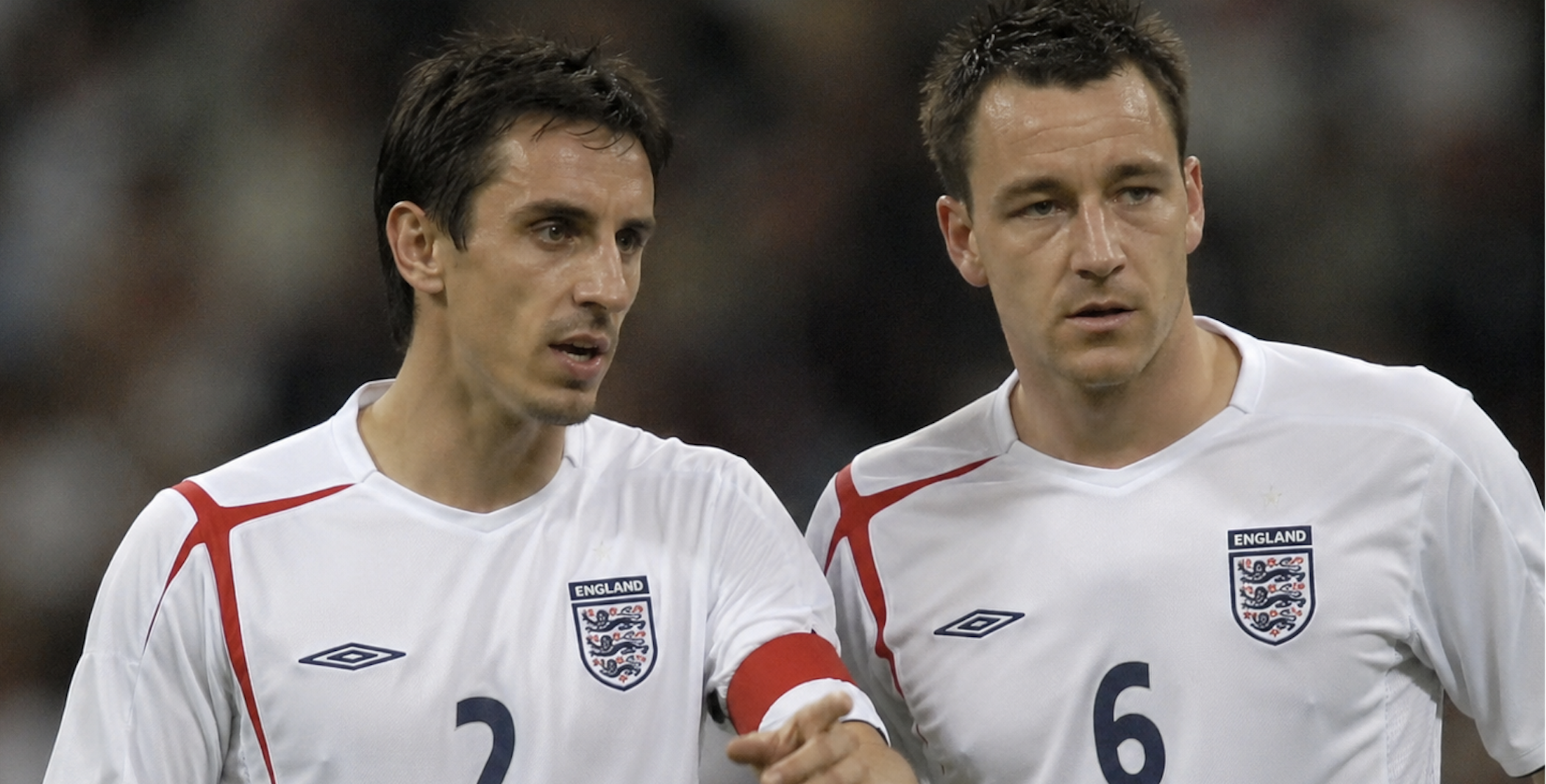
This is why the reaction to discrimination is also important. In recent weeks, the contrasting reactions to Gary Neville and John Terry, both English ex professional footballers who have played critical roles for club and country, have highlighted two very different responses to politics in football. Neville criticised rising populism in England and highlighted the growing visibility of performative nationalism and flag bearing. The response was immediate, with calls for him to step down from Sky and backlash from sections of Manchester United and Salford City supporters.
In contrast, Terry has repeatedly publicly supported Rupert Lowe, a figure positioned on the far right of British politics, beyond Reform UK. Lowe has advocated for mass deportations and attracted controversy for inflammatory claims, including misidentifying charity rescue boats as vessels carrying illegal migrants. Yet the reaction to Terry’s comments has been comparatively muted, often framed not as political extremism, but as patriotism or a defence of national identity.
This contrast reflects something deeper than individual opinion. Criticism of nationalism is increasingly framed as divisive or inappropriate, while more exclusionary rhetoric is tolerated or met with far less resistance. Positions once regarded as far right are increasingly framed as common sense or centre right. Football offers a useful lens through which to observe these shifts because it magnifies wider cultural tensions present in society.
At the same time, it is important not to present football as uniquely regressive. The game has also demonstrated the potential to reduce prejudice and build solidarity. Research from Stanford University found that since Mohamed Salah joined Liverpool, hate crimes in the Merseyside region have decreased by 18.9%, while the amount of Islamophobic tweets made by the team’s followers have halved. The rapid growth of women’s football has also challenged traditional ideas about who football is for and expanded representation within the sport. Campaigns against racism, sexism, and homophobia continue to push the game forward.
This is what makes the current moment complex. Football remains capable of creating inclusion, empathy, and shared identity. But it also risks amplifying some of society’s deepest divisions. Progress and regression are unfolding at the same time.
Ultimately, the existence of racism in football is terrible. But what is presently alarming is the reaction to it, what is challenged, what is ignored, and what gradually becomes normalised. The rise in discriminatory abuse, the amplification of divisive rhetoric online, and the uneven responses to public figures all point toward the same conclusion. The baseline, of what’s offside, is shifting.
These changes rarely happen all at once. They unfold gradually, through repetition, selective acceptance, and the normalisation of what once would have been considered unacceptable. The most significant shifts are often the least visible, not in what shocks us, but in what no longer does. Footballers and football fans are not unique in expressing these views, but their visibility and influence make football one of the clearest places to recognise these shifts and one of the most important spaces in which to challenge them.