
What Can we Learn from Rising Populism?
Politics
Society
Published 25th November
Right-wing populism is on the rise. It is reshaping the political landscape; across the world and here in the UK – with Farage’s Reform UK party now leading in the polls. For many progressives, this is alarming; their instinct is to condemn populist politics as divisive, disruptive and overly simplistic. But dismissing populism – and, in turn, the millions who support it – is also dangerous. It fails to hear the story that populism tells of widespread disconnection and unmet needs. It risks scorning the millions who feel that populism speaks for them.
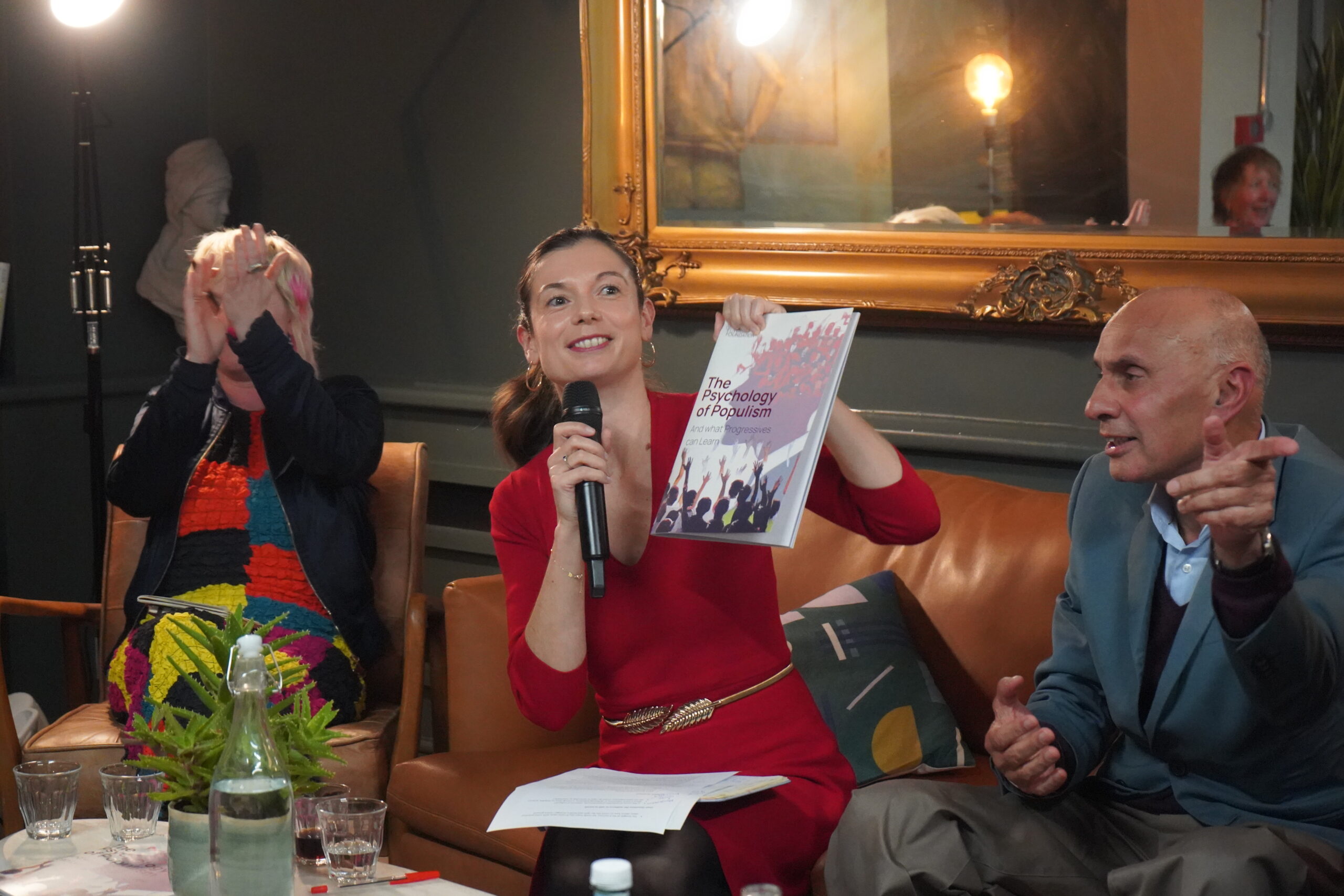
Appreciating this truth, in our latest report we asked, not how do we fight populism, but what can we learn from it? To answer this question, last week we brought together a panel of experts, pollsters, activists, politicians, psychologists and journalists. In discussion, they drew some powerful insights.
The first theme of discussion centred around the importance of respect – which is the foundation of all successful relationships. This fact is captured in one famous psychological study which asked participants to watch one-minute clips of couples just before their weddings. They predicted – with a high degree of accuracy – which marriages would last, and which would not. The secret wasn’t reading body language or detecting deep compatibility – the key predictor was respect. Indeed, mutual respect is the cornerstone of any successful relationship. Without it, everything falls apart.
When we think about this at a national scale – we expose a key cause for the mass exodus from mainstream politics. People no longer respect politicians, nor do they feel respected by them. They feel overlooked – looked down upon by leaders who have consistently disregarded their concerns as irrational. Progressive leaders need to be honest about this, they need to appreciate that voters are the experts of their own lives and take their worries seriously. In a basic sense – they need to listen to voters like adults, not whining children – because as most parents know, patronising dismissal or directive control from above only fuels contempt and reactance.
Putting this into practice, progressive leaders need to listen, to understand and address the two core issues that are driving people to support Reform and uniting an otherwise disparate coalition of voters. The first is democratic disillusionment, the sense that our institutions are failing, and the economy is rigged. The second concerns migration. Progressives have tended to accept the former and denounce the latter. They accept the need to address rampant inequality but see concerns about migration as misguided.
The risk here, is that in entirely dismissing people’s concerns you alienate voters and, in failing to listen, you miss some important lessons. While we would always, fundamentally make the positive case for migration – there is truth in the fact that the current asylum system is dysfunctional, that the integration policies are failing to support, and sometimes actively prohibiting newcomers from feeling part of our communities. Here, progressive leaders need to listen to people’s concerns and respond – not by parroting alarmist rhetoric that simply fans the flames of fear – but by implementing thoughtful policies that address people’s worries and restore a lost sense of agency and control.
Ultimately, following this principle of respect – progressive leaders should be careful not to take their voters for granted. For too long, leaders have relied on the two-party system which has dangerously masked the rising tide of discontent and systematically failed to represent voters. Here, we can think back to Tony Blair, who, got 3 million fewer votes in 2021 than in 1997, while only losing 6 seats. Many of these people went on to vote for UKIP and for Brexit, frustrated by a political system that silenced their discontent. In this context, and accounting for the fact that median wages haven’t risen for fifteen years, that three in ten children are living in poverty; it’s understandable that people are voting in protest, casting their ballot in frustration – to kick over the table of a system that has failed to materially improve their lives and again, failed to hear them. With this, it’s vital that leaders respect and respond to voters’ discontents, appreciating the widespread appetite for change.
The second core theme of the discussion, centred around the fact that politics is as much about the heart as it is about the head – that leaders can’t overlook the value of story, narrative and hope. Indeed, a dry, technocratic and managerial approach will never inspire support because it doesn’t allow space for people to emotionally connect. You need bold and inspiring stories to transport people from where they are, to where they want to be.
This is particularly important at present, where there’s a strong sentiment that ‘Britain is broken’. Part of this sentiment is historically rooted, and part exacerbated by modern technology. Firstly, at its core, populism appeals to a post-imperial psychic wound, a sense that Britain’s power, status and influence is in decline. Secondly, social media has supercharged the tendency for loss aversion, it has magnified the human inclination to focus on the negatives and threats. Here, there’s a sense that we’re living through a persistent permacrisis, one that demands big solutions and transformative change. In this context, incremental and pragmatic steps simply won’t cut it, people want an inspiring and hopeful vision to rally behind, they want to believe that things can be different, better.
In part, this requires progressive leaders to question their blind commitment to post-enlightenment thinking and let go of the belief that people will always eventually be convinced by rational arguments. Because people are emotional beings, they vote with feeling, and importantly, feelings are changed by doing, not telling. In this sense, people need leaders to take their non-material lives seriously, they need politicians that recognise how people feel and show them a better path.
With this, progressives would do well to focus on embodied work and movement building. Here, we can learn from the movement Farage is building, addressing people’s desire for belonging and national pride by physically mobilising people with a patriotic campaign, putting flags on lamp posts. Further, while it used to be socialists organising saving clubs and supporting people buying necessities, now its Farage helping people buy nappies. While progressive movements have become increasingly technocratic and managerial, those on the right have been connecting with and convening people. Indeed, we can learn from those who are getting it right, unifying vision and action – those like Mamdani, who, in New York, has been telling a powerful story of change, and combining this with clear practical promises – of universal childcare, rent freezes, city-owned grocery stores and higher wages. Ultimately, hope is praxis, and positivity is enactment – people need a vision to rally behind, and they need practical everyday solutions that will – through action – make them believe in change.
This is where we left the conversation, and where we hope to continue our work – bringing listening and respect, empathy and action to the foreground of progressive politics.