Leadership lessons from Croydon
Politics
Published 6th May 2026
It’s a big week for the country. Tomorrow, millions will be heading to the polls to cast their votes in local elections; with 5 mayoral contests and around 5,000 council seats up for grabs across 136 councils.
There’s a mood of anxious anticipation as predictions show the Reform UK and Green parties set to make significant gains. With Labour on track for its worst local election performance, it is clear public mood has shifted significantly since their 2024 landslide victory.
For Labour there is, however, an island of hope in Croydon. In the campaign led by Global Future Foundation’s very own – Rowenna Davis. Indeed, while the Labour party is set to lose many of the seats it currently holds, in this election we find a candidate who is hoping to lead the party to victory. Who may buck the trend and remove the incumbent Conservative Mayor. And from whom we might learn some important and timely lessons about leadership and local politics.
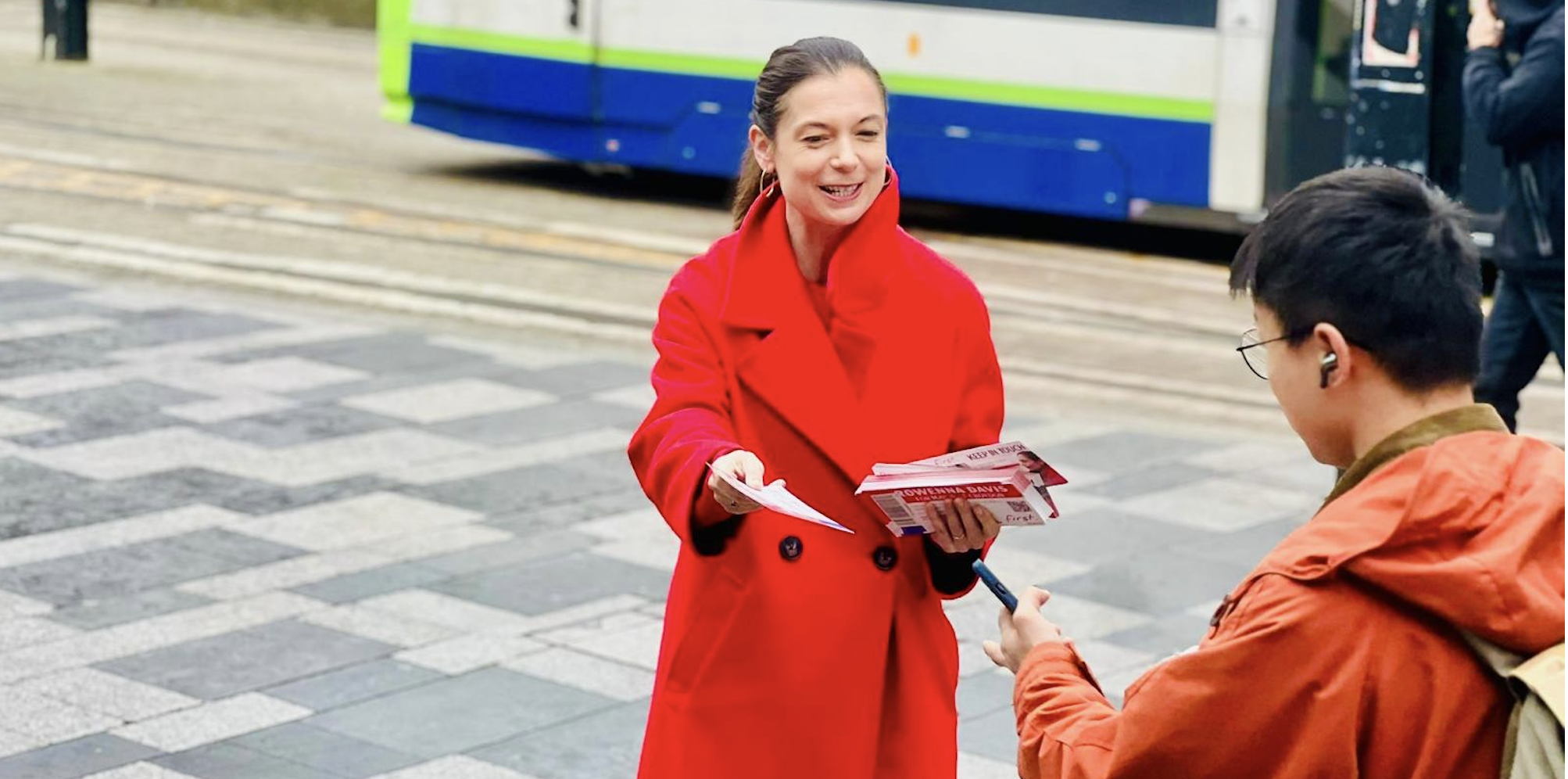
So, what makes this campaign special? I went down to Croydon to see for myself.
What struck me was not a single tactic, but a pattern – one that can be understood through four elements. These can be captured in the acronym, N.E.A.R.
The N is for Narrative – because people need stories. We are a species that prefer meaning making over pure logic and in Croydon, Rowenna offers a compelling narrative of grounded hope. Her ‘People First’ message is much more than a well-crafted tagline. It is a narrative of policy and practice. A message that prioritises the interests and voices of the people of Croydon.
Rowenna’s story is best captured in her love letter to Croydon where she challenges the negative stereotypes and presents a different vision. She sees the sense of loss and betrayal, etched into the landscape of disused buildings. But beneath that, she sees the foundation of diversity, strength and vibrancy. She tells a story of Croydon that lies in the warmth of jollof and the tang of vinegar on chips; in the trams gliding through the crazy kaleidoscope of architecture and kids scribbling lyrics on a bench outside the Brit school. Importantly, she built this story through living and listening – through inviting people of all parties and no party to come together and talk about all that they hope for the place they call home.
This leads to the second element of Emotional connection. When people go to cast their votes, they vote largely on feeling. They want to vote for someone who, instinctively, they like and trust.
With this, Rowenna has effectively used social media, bringing her story directly to voter’s phone screens. Whether she’s dancing in the shopping centre to her favourite Taylor Swift song or eating at her favourite local spots with her two daughters – never not in her trademark red coat – she transforms politics into content that is engaging and relatable. Here, she understands that social media is a vital tool, a platform to get the story out there. But she appreciates that impact is not measured in views or shares. It’s recorded in trust earned. She knows that it’s not about a viral moment, but movement building.
On this, the prerequisite for any emotionally resonant narrative is Authenticity. We need leaders we can trust. Whose campaigns and stories are reflected in reality. In Rowenna we see this. As a local mum, a teacher and long-term resident, her care for Croydon is demonstrated not only in her manifesto pledges, but how she lives.
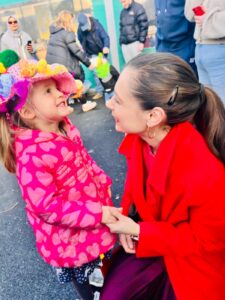
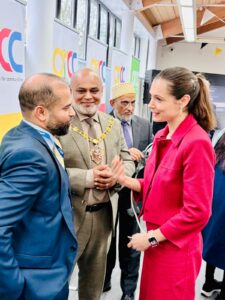
It can be traced in the way familiar passersby stop her in the street – old students, parents from the school gates, those she’s met door knocking or dishing out hot meals on a cold winter evening. Her commitment to Croydon is grounded in the fact that it is the place she calls home; the place she hopes her children will too, feel proud to call home.
Spending the day with her and her team, I saw this up close. Joining her bright and early at East Croydon station, the positive energy was noticeable. There was no grand speech or big performance. Just multiple meaningful interactions.
Now, I’ve worked with Rowenna on various projects over the years. She was my manager when I first did an internship at Global Future Foundation back in 2021 and I distinctly remember her inspiring, encouraging and energising nature. Watching her now, surrounded by young campaigners – each embracing the early start, each committed in their support – it’s clear that Rowenna’s genuine character continues to shape the culture around her.
Last, and by no means least, effective leadership needs to be Rooted. There’s no use having a good story or charming personality without substance.
What sets Rowenna’s manifesto apart – locally and nationally – is a clear commitment to evidence-based and best-practice policy. Her plan to revitalise the town centre draws on her research report, which argues that principles of ‘Earning and Belonging’ are required to replace cycles of decline with lasting prosperity. Here, recognising that thriving communities depend on financial security, she gets to the root of the problem, focusing on creating future-ready jobs that target skills gaps and positioning Croydon as a hub for vocational excellence.
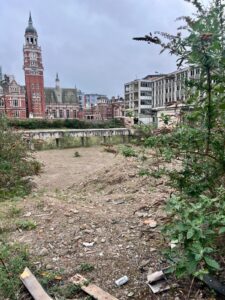
Crucially, this is where narrative meets reality. She identifies the problems and actors, the villains and heroes – calling out the incompetence of incumbent leaders and the exploitative practices of corporate squatters, while outlining investment and support for those ready to build and contribute locally. She sees the old nestle tower, a skeleton marking the skyline, and in its place envisions a green heart-shaped park. She creates a story of hope that is grounded not in fantasy, but facts.
So, with the polls opening early tomorrow morning, it’s worth remembering that participation matters. Local elections may not command the same attention as general elections, but they shape the places we live in some of the most immediate and tangible ways.
Whatever the results tomorrow, the picture that emerges is likely to be complex. A fragmented electorate, shifting party loyalties, and growing public dissatisfaction will present real challenges for those in power. As the government navigates this uncertainty, there is an imperative for reflection.
Narrative, Emotional connection, Authenticity, and Rootedness are not just campaign tactics, they are guiding principles for effective leadership in turbulent times. Croydon offers one example of what this can look like in practice, and whatever the results, future leaders should draw lessons from this – to stay NEAR – to people, place and purpose.