Inflation Anxiety: Why inflation is much more than prices rising
Business
Society
Published 16th January 2026
Inflation is usually discussed in numerical terms, presented through graphs, percentages and statistics. But what is equally important is how people react emotionally to prices rising, and the effect that this has on their day to day life. In fact, inflation is often felt emotionally more strongly than it is observed. Numbers only tell half the story, as inflation leaves a psychological imprint that influences behaviour, confidence, and decision making in ways that economic data alone doesn’t fully capture.
For an economy to be prosperous, a healthy amount of inflation (about 2%) is required. Yet when people hear the word inflation, alarm bells start ringing. Studies show that even moderate price inflation is anxiety inducing for many people. People react more intensely to inflation than to other macroeconomic indicators such as GDP and unemployment rates. This is because we are constantly exposed to receipts, menus, and rent notices. Each encounter reinforces the sense that things are getting worse everywhere, all at once. This repeated exposure magnifies fear and makes inflation feel more personal.
We react intensely to inflation even when it goes hand in hand with wage inflation (which is usually the case). One reason for this is loss aversion; people experience losses more intensely than equivalent gains, and inflation reframes everyday spending as a loss. The emotional response for wage inflation is much less significant than the response provoked by rent or groceries going up.
On a deeper level, people subconsciously perceive prices rising as a personal betrayal on behalf of companies. It disrupts their sense of fairness and trust, as they interpret prices rising as a sign of greed, incompetence, and system failure by governments and corporations. In reality, companies have little control over price setting. As the trust between corporations and customers erodes, people become more sensitive to negative information and more pessimistic about the future.
Inflation therefore becomes much less about prices rising, and much more about uncertainty and losing control. It blurs the future value of money, making planning harder. Savings feel less secure, long-term goals feel shakier, so people become more present focused. Behavioural economics shows that when the future feels unpredictable, people are more likely to cut back sharply or make defensive financial decisions, even when those choices may not be optimal in the long run.
The result is a psychological feedback loop. Inflation increases anxiety, anxiety narrows thinking, and narrowed thinking makes economic conditions feel even more threatening. What looks like overreaction from a purely economic perspective is often an emotional response to instability and loss of predictability.
As of late 2025 inflation in the UK sits at 3.4%, well above the Bank’s 2% target, reflecting a continued cost of living challenge for households after years of elevated price growth, although it does mark a significant decline from the peaks of above 10% seen in 2022. Additionally, forecasts suggest the future looks bright (with regards to inflation at least), as inflation is predicted to fall sharply in the coming months, estimated to reach 1.8% by April 2026.
Nevertheless, the psychological impact of years of higher prices on consumer sentiment doesn’t disappear as soon as inflation numbers fall. People anchor their expectations to the recent past, so even modest price increases still feel painful when they follow a prolonged period of elevated inflation.
That emotional toll shows up in consumer attitudes. Surveys indicate that many Britons expect inflation to remain higher than official figures suggest, and a large majority now associate rising prices with a weaker economy overall, not just as abstract macroeconomic data. This means that the fear of ongoing prices increasing, regardless of the actual percentage, can itself heighten anxiety, reinforcing loss-focused thinking and reducing confidence.
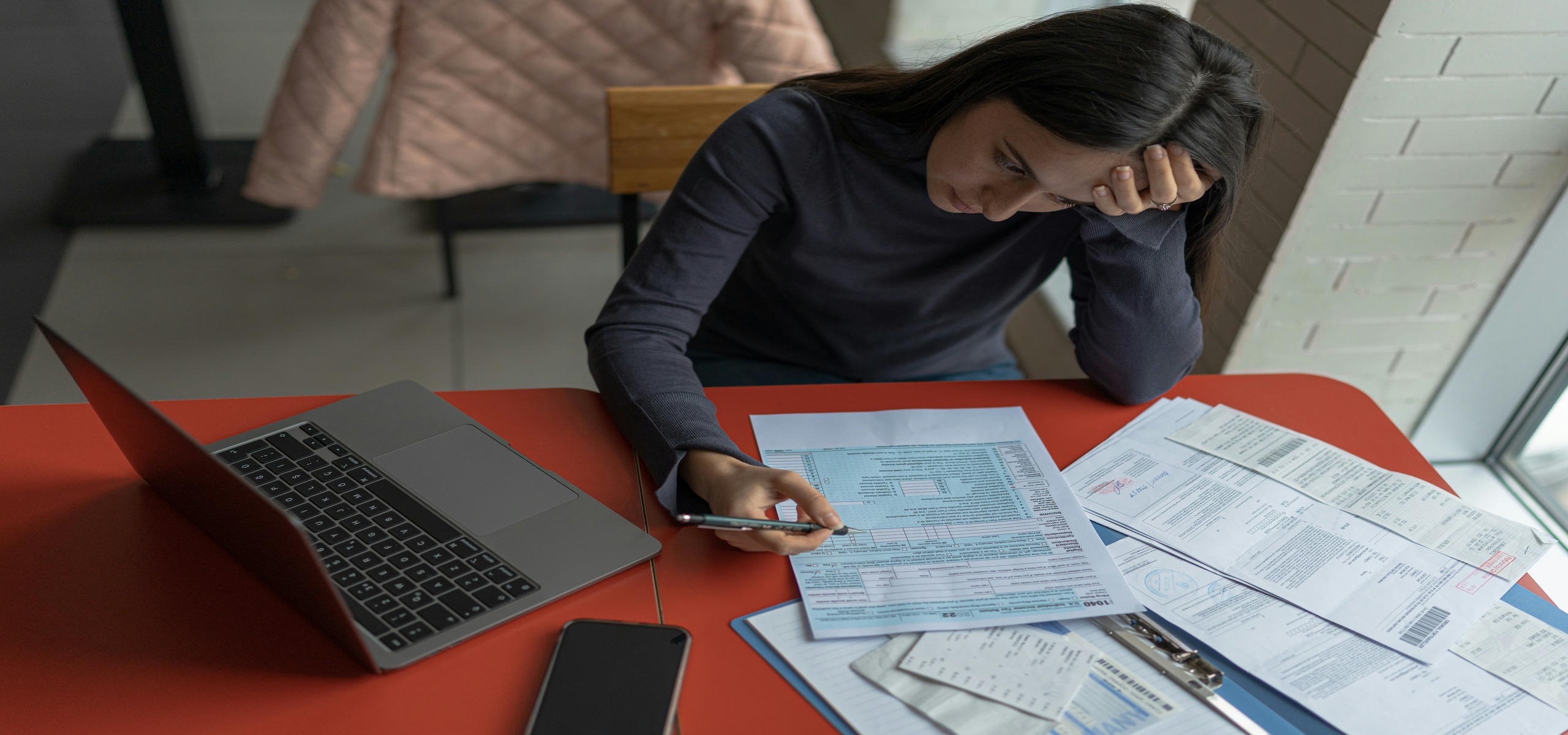
Inflation, after all, isn’t just about money being worth less. It’s about people feeling less secure about the future they’re trying to plan for. Indeed, what is often overlooked is that the cost-of-living pressures in the UK are also affecting mental health. Research in the UK has shown that a significant proportion of adults report feeling anxious or stressed about their financial situation and living costs, especially among lower-income groups. Almost one third (31%) of UK adults have felt anxious in the past month due to their personal financial situation. And, amid these concerns, Keir Starmer declared tackling the cost-of-living crisis as his government’s top priority.
Understanding inflation anxiety as a psychological phenomenon, not just a statistical one, helps explain why public reactions to inflation can be so intense even when indicators suggest improvement, and why restoring confidence often requires more than just policy adjustments. It requires rebuilding trust, reducing uncertainty, and acknowledging that inflation is felt emotionally before it is understood mathematically.
One way to mitigate the negative psychological effect of inflation is to change the words we use to describe it. The term ‘cost of living’ immediately provokes panic, implies loss and scarcity, and it frames inflation as a crisis or a burden. In the US a more appropriate term is used: ‘affordability’ is less emotionally charged and recognises that increasing prices aren’t inherently bad, as long as wages follow suit.